Grease never politely asks permission to settle in. It clings to filters, coats fan blades, and crawls into the corners of your kitchen, turning your rangehood into a sticky, smelly hazard zone. Left long enough, that buildup becomes a real fire risk, ruins air quality, and feeds the kind of bacteria no one wants near dinner.
Australian homes face an even tougher battle. We love our barbecues, high-heat stir-fries, and big family cooks, which means more airborne grease than most ventilation systems can handle. When the rangehood stops doing its job, you notice. Smoke hangs around, the kitchen smells stale, and surfaces get grimy faster than you can wipe them.
Regular rangehood cleaning isn’t optional if you care about hygiene, safety, or simply breathing fresh air while you cook. A clean unit pulls out smoke and grease effectively, keeps your home healthier, and even extends the life of the appliance. This guide gives you everything you need to keep that kitchen hero working at full power, and it shows you when calling in a professional is the smarter move.
Why Rangehood Cleaning Matters More Than You Think
When grease collects inside your rangehood, it doesn’t just look bad. It spreads allergens and bacteria through the air you breathe, especially in busy kitchens. That grease is also highly flammable, which creates a serious fire hazard if left to build up. Many Australian homes and rentals already struggle with poor ventilation, so a dirty rangehood only makes smoke, smells, and moisture problems worse. Regular cleaning keeps your kitchen safer, cleaner, and healthier with almost no effort.

How Often Should You Clean Your Rangehood in Australia?
Heavy cooking means more grease in the air. If you fry, grill, or BBQ often, clean your filters every 2–4 weeks. Homes with pets should do the same because pet hair and oils make grime stick faster. Coastal areas like Newcastle and the Central Coast deal with higher humidity, so mould and grease build up faster too. Keep to a monthly cleaning to avoid problems. Rentals usually require the rangehood to be spotless at the end of the lease, while homeowners benefit from a deeper clean every 3–6 months to keep the system running properly and extend its lifespan.
What You Need Before You Start Cleaning
A few common tools make rangehood cleaning easier and safer:
- A strong degreaser. Eco-friendly products work well and are better for indoor air.
- Microfibre cloths that lift grease instead of smearing it around.
- Hot water, bicarb soda, and dish soap for soaking filters.
- Gloves and safety gear to protect your hands and eyes.
These basics handle light to moderate buildup. Thick, sticky grease often needs industrial-grade products and equipment, which is where a professional cleaning can save you a lot of time and frustration.
Step-by-Step Guide: How to Clean a Rangehood Filter
1. Remove and Inspect the Filter
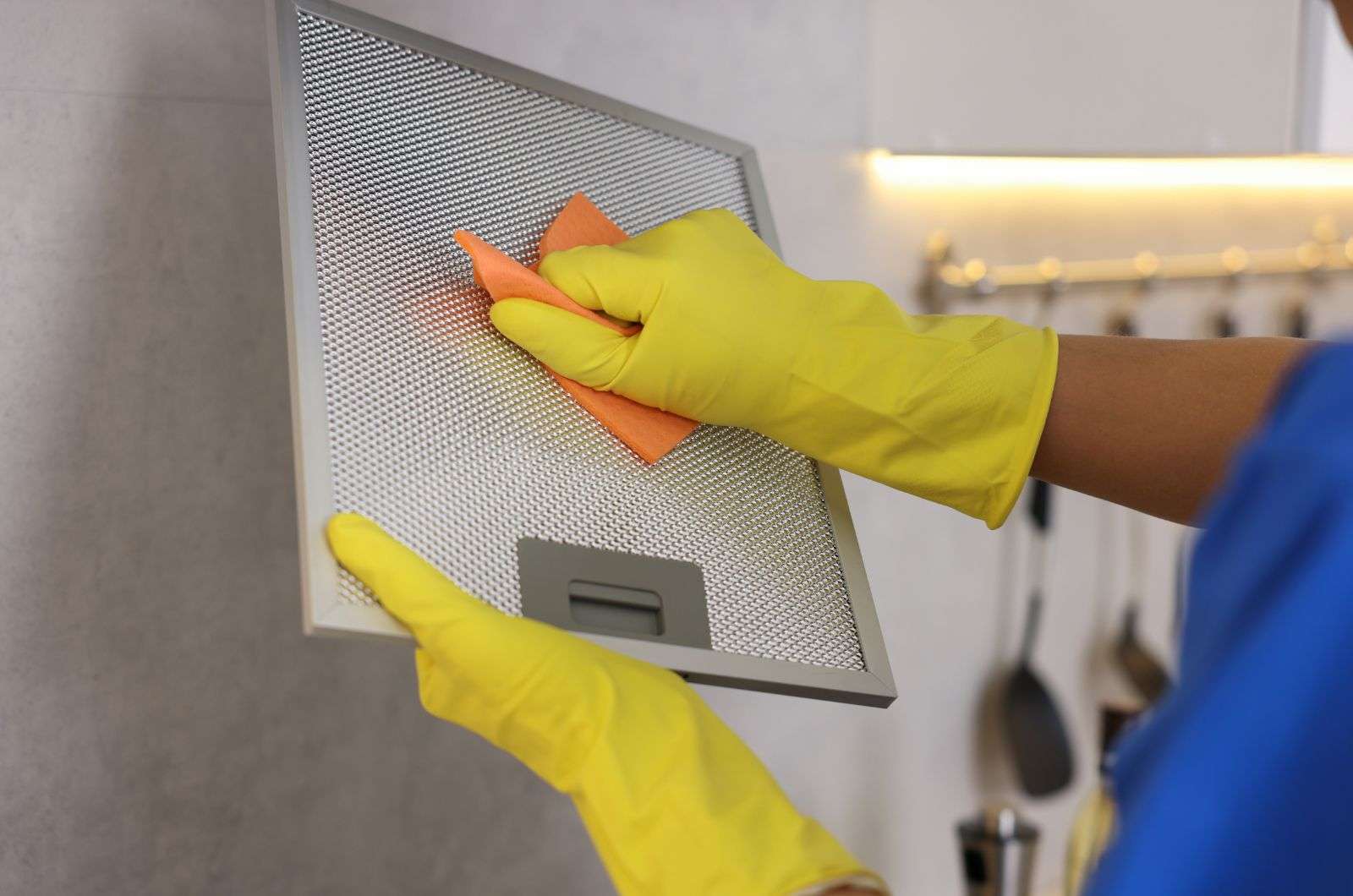
Turn off the power first. Slide or unclip the filter and take a quick look at the buildup. If it feels sticky, smells bad, or looks dark and clogged, it needs a deep clean right away.
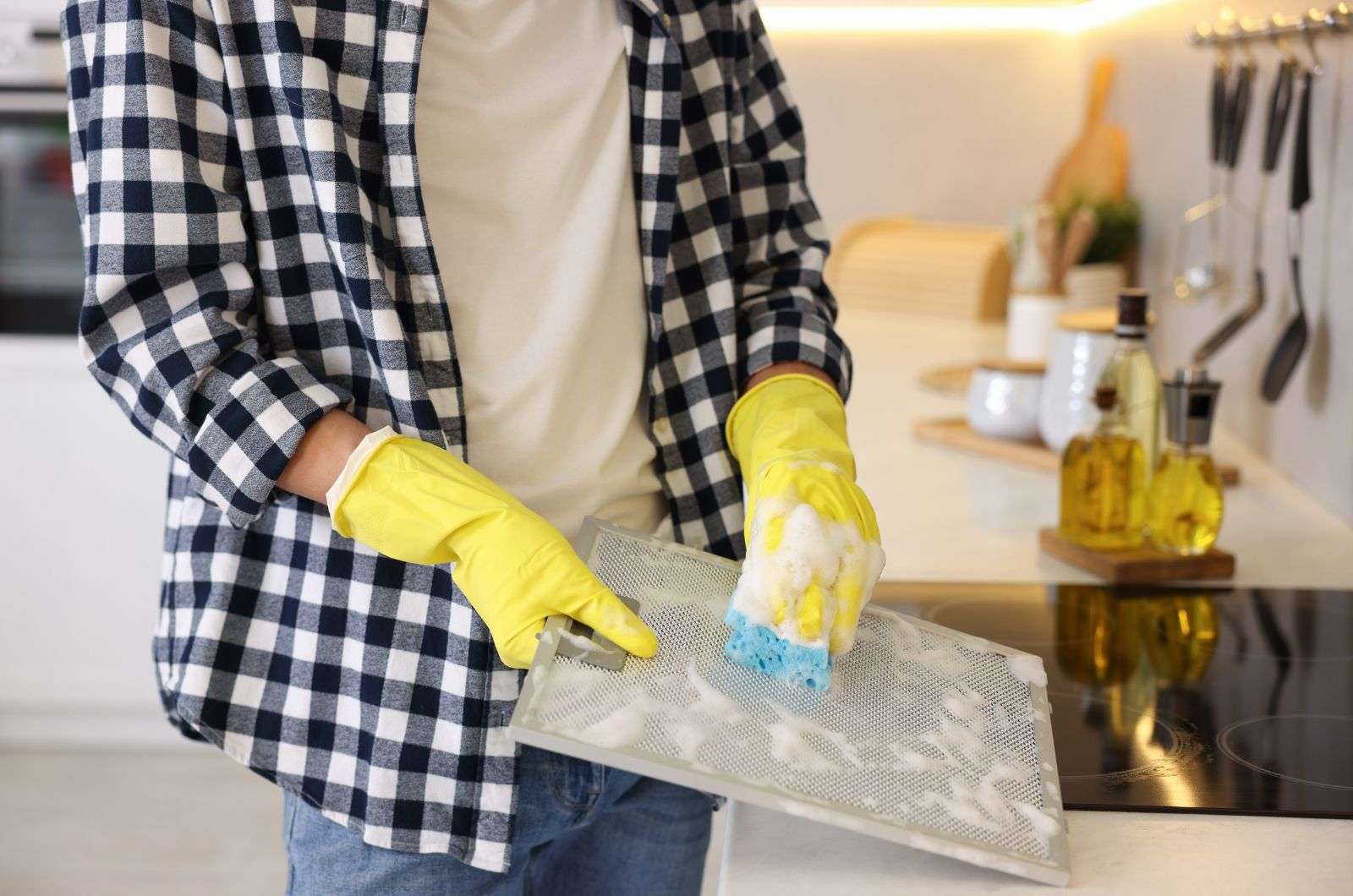
2. Degreasing Method Using Bicarb Soda Soak
Fill your sink or a large tub with hot water. Add a generous amount of bicarb soda and dish soap. Submerge the filter and let it soak for 15–30 minutes. Scrub any remaining residue with a soft brush. Rinse well.
3. Degreasing Method Using Dishwasher-Safe Approach
If your filter is marked as dishwasher-safe, place it flat in the bottom rack. Run a heavy-duty or high-heat cycle. Avoid placing it near delicate items since the grease can transfer.
4. Drying and Reinstalling Filters Properly
Let the filter air-dry completely. Water inside the hood can damage the fan or motor. Once dry, clip or slide it back into place securely. Make sure there are no gaps that could reduce suction performance.
A clean filter helps your rangehood pull out more grease, reduce cooking smells, and keep your kitchen fresher longer.

How to Clean the Rangehood Exterior (Stainless Steel, Glass, and Painted)
Stainless Steel Cleaning Without Streaks
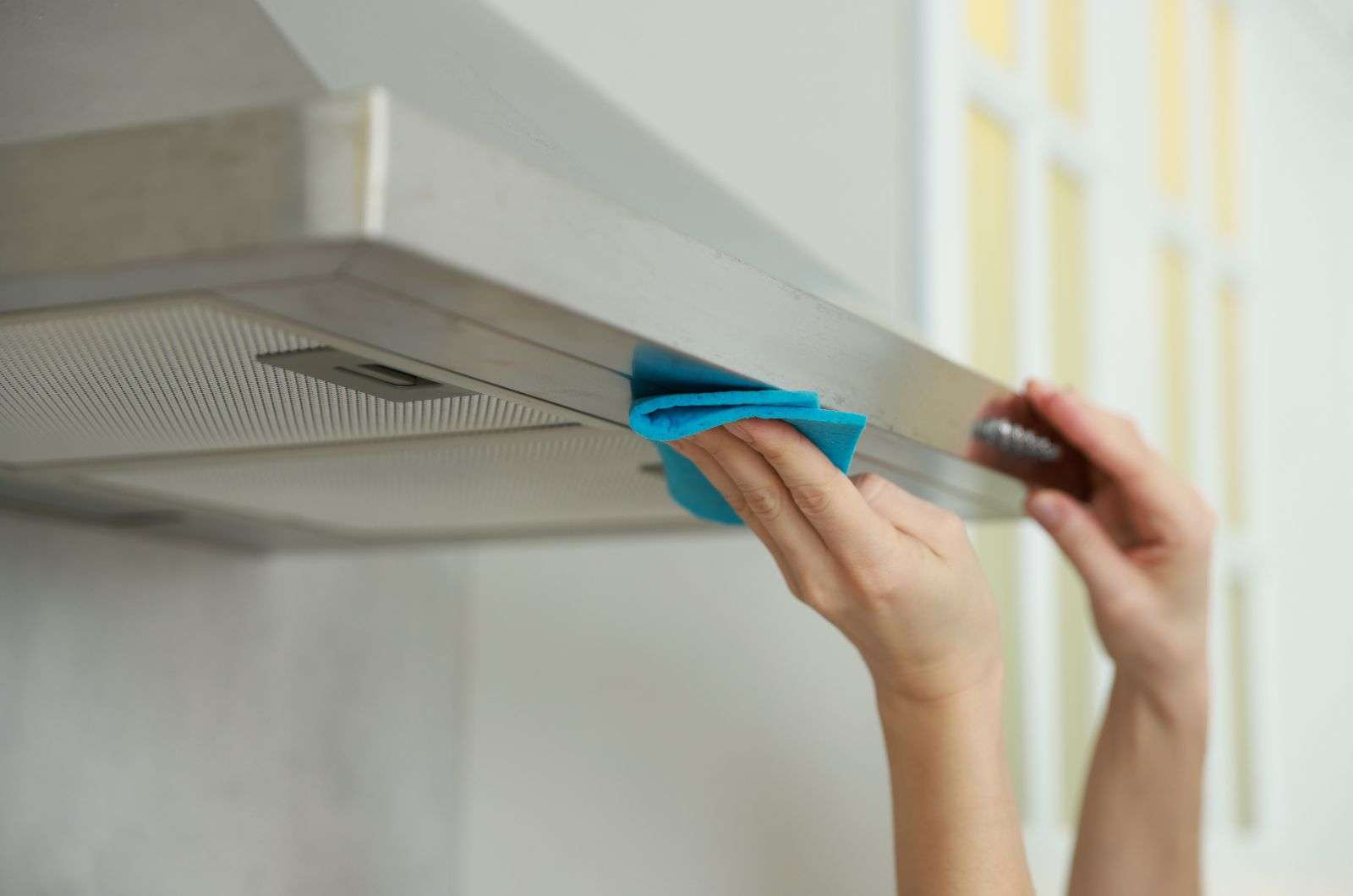
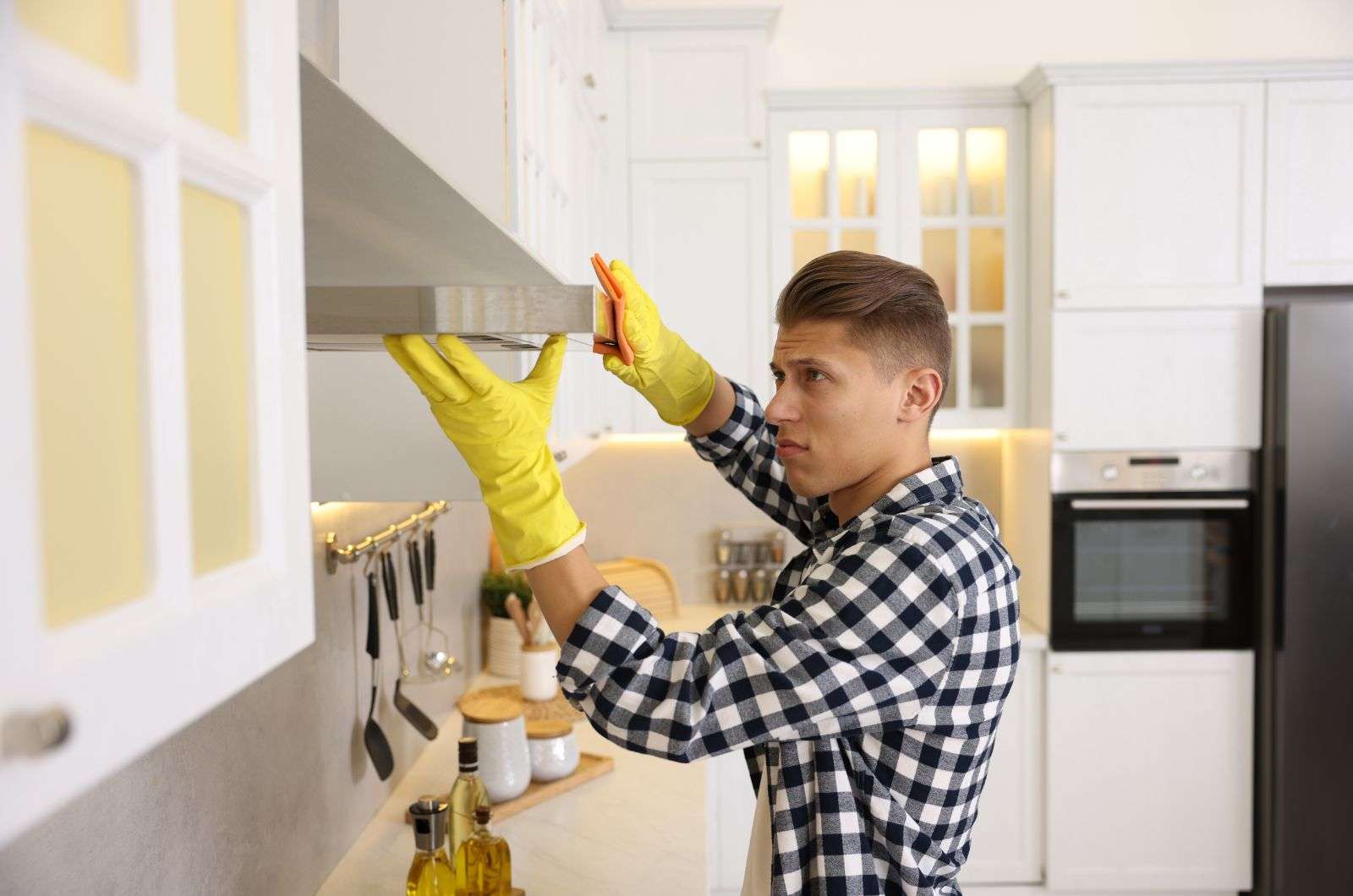
Use a microfibre cloth and a stainless-steel cleaner or a simple mix of mild soap and warm water. Wipe in the direction of the grain so the finish stays smooth and streak-free. Avoid abrasive pads that scratch surfaces on brands like Westinghouse, Smeg, or Omega.
Glass Panels and Lighting
Glass needs a gentle touch. Use a non-ammonia glass cleaner or a vinegar-water mix for a clear shine. Remove grease near light fittings carefully and avoid spraying liquid directly on bulbs or wiring.
Switches and Control Surfaces
Grease collects quickly on buttons and touch panels. Wipe with a damp cloth and a little dish soap, then dry immediately. Keep liquids away from gaps and electrical areas. Clean controls regularly to keep them responsive and prevent build-up that can cause sticking or malfunction.
Deep Cleaning Inside the Rangehood: When to Go Beyond the Basics
Over time, grease and dust don’t just sit on the filter; they coat the fan blades and build up inside the ducts. This not only reduces efficiency but also causes lingering odours in your kitchen.
Deep internal cleaning involves removing the fan, inspecting ducts, and tackling grease in hard-to-reach areas. It also means working near electrical components, which carries safety risks if done incorrectly.
Important: Advanced internal cleaning is not DIY-safe. Calling in a professional ensures thorough results, protects your appliance, and keeps your kitchen safe from fire or electrical hazards.
You may also like: How to Clean an Oven – Step-by-Step Guide
Rangehood Cleaning Mistakes People Make
Cleaning a rangehood might seem simple, but small mistakes can cause big problems:
- Using harsh chemicals that corrode stainless steel or painted surfaces.
- Scrubbing too hard or mishandling fan motors can stop the hood from working properly.
- Leaving filters wet, which encourages mould and damages the unit.
These are exactly the situations where homeowners end up calling professionals to fix avoidable issues, saving time, stress, and potential repair costs.
DIY vs Professional Rangehood Cleaning: What’s Right for You?
DIY rangehood cleaning is a budget-friendly option, but it often takes more time and provides only a basic clean. It’s suitable for light maintenance but may leave behind hidden grease and buildup, which can reduce your rangehood’s efficiency and increase fire risks. There’s also a higher chance of accidental damage if not done carefully.
On the other hand, professional rangehood cleaning may cost a bit more, but it’s faster, safer, and delivers a deep, thorough clean. Professionals use specialized tools and techniques to remove stubborn grease, improving fire safety and ensuring your appliance runs smoothly for longer.
In short, while DIY works for minor upkeep, professional cleaning offers better safety, results, and long-term value.
How Much Does Professional Rangehood Cleaning Cost in Australia?
The cost of professional rangehood cleaning in Australia generally depends on several factors and can vary from one home to another. While prices typically fall within a moderate range, the exact amount is influenced by the size and type of your rangehood, the severity of grease buildup, how difficult it is to access, and the type of service required, whether it’s a simple filter clean or a full internal deep clean.
Investing in professional cleaning is often much more cost-effective than waiting until filters, fans, or motors need replacement due to neglect. A thorough clean not only keeps your rangehood running efficiently but also reduces fire risk and extends the life of the appliance.
To get the most accurate estimate, it’s best to request an online quotation tailored to your kitchen and specific rangehood.
Signs Your Rangehood Needs Immediate Professional Attention
If your rangehood isn’t doing its job properly, it’s more than just an annoyance; it’s a warning sign. Here’s when to call in a professional right away:
- Smoke isn’t extracting: If cooking smoke lingers or spreads through your kitchen, your filters or ducts are likely clogged.
- Sticky cabinets nearby: A clear sign of airborne grease buildup settling around the hood area.
- Strong lingering smells: Odours that won’t fade mean the filters are saturated and no longer trapping grease effectively.
- Loud or rattling fans: Noise often points to grease-clogged fan blades or loose internal parts that need expert cleaning.
- Grease dripping onto the cooktop: This is a red flag for both hygiene and fire safety.
Ignoring these signs can lead to serious risks, fire hazards, poor air quality, and faster wear on your appliance. If any of these sound familiar, book a professional clean immediately to restore safe and efficient airflow in your kitchen.
Make Your Rangehood Last Longer: Preventive Maintenance Tips
Keeping your rangehood in top shape doesn’t take much, just a few smart habits that make a big difference.
- Follow a filter cleaning schedule: Heavy frying or BBQ cooking means cleaning every month. Light cooks can stretch it to every 2–3 months.
- Reduce oil splatter: Use lids, splatter guards, or lower the heat slightly when cooking oily dishes to minimise grease reaching the hood.
- Improve kitchen ventilation: Open a window or use a secondary exhaust fan when cooking, especially in tightly sealed Australian homes, to reduce moisture and airborne grease.
Consistent care prevents build-up, improves airflow, and extends the lifespan of your rangehood. For a cleaner kitchen overall, check out our guide on [How to Clean Kitchen Cabinets Grease] to keep every surface spotless.
Book a Professional House Cleaning Service
Enjoy a spotless, comfortable home without lifting a finger. Our experienced cleaning team takes care of every detail, from regular house cleaning to kitchen-focused extras such as rangehood, oven, and stovetop cleaning. We make sure your home not only looks clean but feels fresh and welcoming too.
Clean4You offers trusted house cleaning services across Australia, with teams available in Newcastle, Adelaide, Perth, Sydney, Brisbane, and many more. Whether you’re after a quick tidy-up or a deep clean that includes those hard-to-reach spots, we’ll handle it all with care and precision.
Let us do the hard work so you can relax in a cleaner, healthier home. Get in touch with Clean4You today.

Latest Blogs