Mowing the lawn is one of those essential chores that keep your garden looking tidy and healthy. But a common question many homeowners ask is, what time can I mow my lawn without disturbing neighbours or risking fines? In most Australian states, lawn mowing is generally allowed between 7 AM and 8 PM on weekdays, with slightly later start times on weekends and public holidays, although exact rules can vary by council.
Whether you’re a weekend warrior or prefer a quick midweek trim, understanding the right mowing times is crucial for keeping your lawn in top shape while staying compliant with local noise regulations. In this guide, we’ll cover state and territory mowing restrictions, best times to mow for lawn health, how often to mow your lawn, and practical tips to get the most out of every mowing session.
Why Timing Matters When Mowing Your Lawn
Mowing your lawn isn’t just about aesthetics. It also affects the health of your grass and the comfort of your neighbours. Here’s why timing is key:
- Noise Pollution: Lawn mowers generate significant noise, typically between 70-95 decibels, depending on whether they are petrol-powered or electric. Early morning or late-night mowing may disturb your neighbours and can even violate local regulations.
- Grass Health: Mowing at the wrong time of day, such as under the harsh midday sun, can stress your lawn. Wet mornings or evenings may also lead to uneven cuts and increase the risk of disease.
- Personal Safety: Mowing when the lawn is wet or in extreme heat can be dangerous. Always choose a safe time of day and make sure your equipment is well-maintained.
When Can I Mow My Lawn? State-By-State Guide
In Australia, the rules on when you can mow your lawn vary by state and territory, with most regulations designed to minimise noise disturbances for neighbours. As a general rule, lawn mowing is permitted from around 7 AM on weekdays, with later start times on weekends and public holidays, depending on where you live. Always check local council guidelines, as they have the final say on enforcement and complaints.
Lawn Mowing Times in Australia (Quick Reference)
To help you get a fast, clear answer, here’s a state-by-state overview of permitted lawn mowing hours across Australia:
| State | Weekdays | Weekends & Public Holidays |
|---|---|---|
| NSW | 7 AM – 8 PM | 8 AM – 8 PM |
| VIC | 7 AM – 8 PM | 9 AM – 8 PM |
| QLD | 7 AM – 7 PM | 8 AM – 7 PM |
| SA | 7 AM – 7 PM | 9 AM – 7 PM |
| WA | 7 AM – 7 PM | 9 AM – 7 PM |
| TAS | 7 AM – 8 PM | 10 AM – 8 PM |
| NT | 7 AM – 8 PM | 8 AM – 8 PM |
| ACT | 7 AM – 8 PM | 8 AM – 8 PM |
What Is the Best Time to Mow Your Lawn?
Knowing when to mow your lawn goes beyond legal restrictions. The best time for mowing depends on grass health, weather conditions, and your schedule. Here’s what to consider:
- Morning Mowing: Mowing in the morning, after the dew has dried, can help prevent disease and reduce stress on the grass. Early morning is generally cooler and safer for your lawn.
- Afternoon Mowing: If mornings aren’t convenient, mid-to-late afternoon is a good alternative. Avoid mowing during peak heat, as this can scorch grass and cause stress.
- Avoid Wet Grass: Mowing wet grass can lead to uneven cuts, clog your mower, and promote fungal growth. Wait until the grass has dried for the best results.
- Consistency Matters: Aim to mow at regular intervals based on your grass type and growth rate. This keeps your lawn healthy and prevents excessive stress.
How Often to Mow Lawn
Many homeowners ask, how often to mow lawn for optimal health. The answer depends on the type of grass and growth rate:
- Warm-season grasses (e.g., Buffalo, Couch, Kikuyu): Mow every 5-7 days during peak growth in summer.
- Cool-season grasses (e.g., Ryegrass, Fescue): Mow every 7-10 days.
- General rule: Never remove more than one-third of the grass blade in a single mowing. This minimises stress and encourages dense growth.
Remember, frequency may vary with seasonal changes. Slower growth in winter may require less frequent mowing.
Lawn Mowing Tips for a Healthy Lawn
A well-maintained lawn requires more than just mowing at the right time. Here are some practical lawn mowing tips:
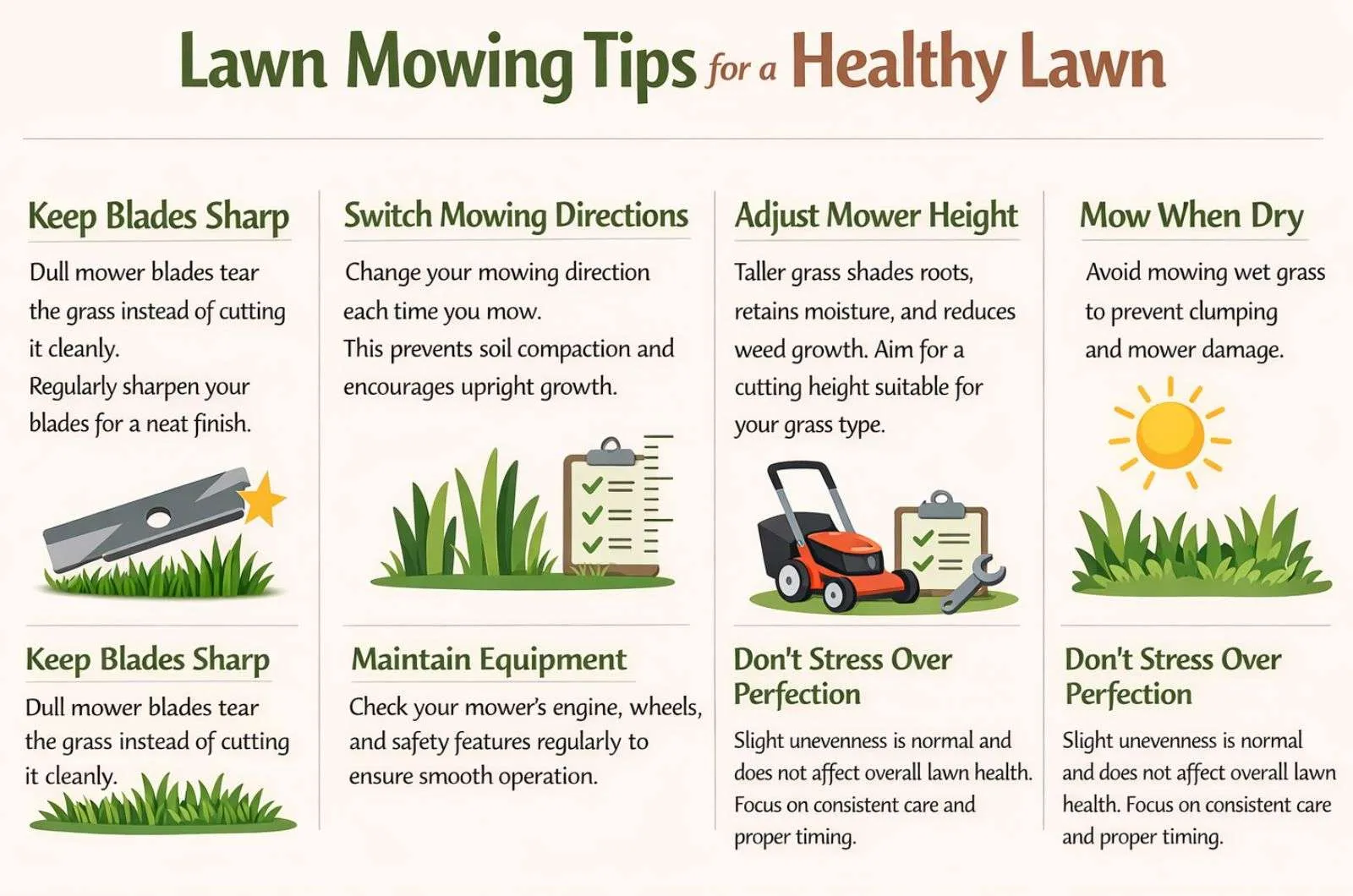
- Keep Blades Sharp: Dull mower blades tear the grass instead of cutting it cleanly. Regularly sharpen your blades for a neat finish.
- Switch Directions: Change your mowing direction each time you mow. This prevents soil compaction and encourages upright growth.
- Adjust Mower Height: Taller grass shades roots, retains moisture, and reduces weed growth. Aim for a cutting height suitable for your grass type.
- Mow When Dry: Avoid mowing wet grass to prevent clumping and mower damage.
- Maintain Equipment: Check your mower’s engine, wheels, and safety features regularly to ensure smooth operation.
- Don’t Stress Over Perfection: Slight unevenness is normal and does not affect overall lawn health. Focus on consistent care and proper timing.
Noise and Environmental Considerations
Lawn mowers produce between 70-95 decibels of noise, which is louder than normal conversation and can easily disturb neighbours. Here are a few tips to stay considerate:
- Avoid mowing early mornings and late evenings outside the permitted hours.
- Opt for electric or battery-powered mowers if noise is a concern.
- Communicate with neighbours if you need to mow during borderline times.
Understanding these factors ensures compliance with local noise regulations and keeps your community happy.
The Subtle Science of Lawn Health
Mowing is only one piece of lawn maintenance. Your lawn’s health depends on:
- Watering schedule: Deep watering encourages deep roots.
- Fertilisation: Feed your lawn seasonally to promote growth.
- Weed control: Remove weeds regularly to prevent nutrient competition.
Mowing complements these practices by removing dead growth, stimulating healthy blades, and maintaining a tidy appearance.
Frequently Asked Questions

Latest Blogs